- info@eeasyworldvision.com
- +91 88662 44440
- +91 72010 10440
- Mon to Sat: 10.00AM to 6.30PM
Study Abroad Education Loan 2026: Complete Guide for Indians
22
October
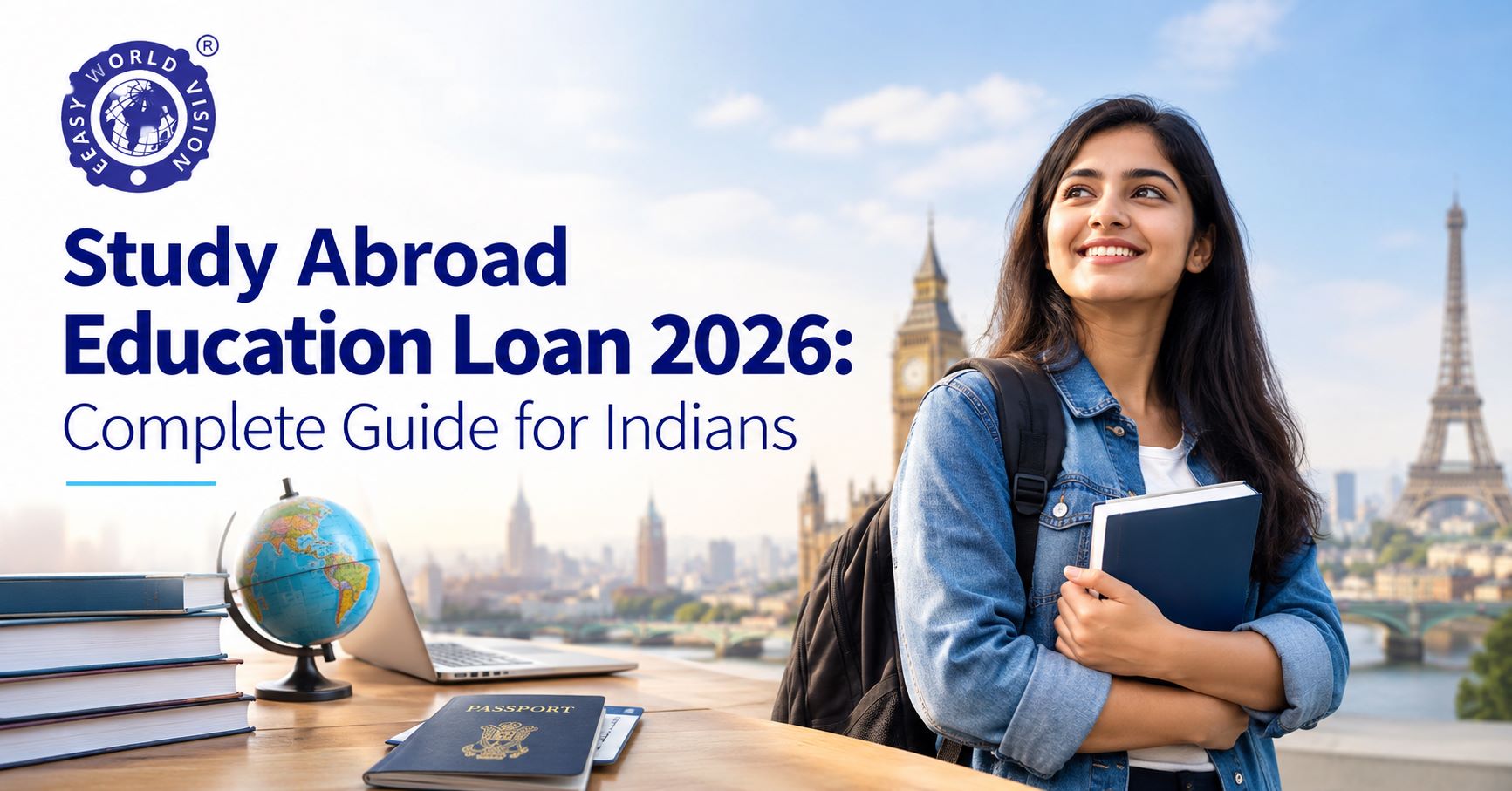
Study Abroad Education Loan 2026: Complete Guide for Indians
Study abroad programs may result in opportunities in international education, career, and learning. But the cost of tuition, accommodation, travel, and other expenses may turn out to be expensive. A Study Abroad Education Loan may help Indian students cover their expenses without paying in one lump sum.
In the year 2026, students may apply for education loans from public sector banks, private sector banks, and specialist institutions. Being familiar with criteria of eligibility, interest rates, collateral, and repayment conditions can guide your choice.
This comprehensive guide by Eeasy World Vision will give you all the information that Indian students should know about education loans for studying abroad.
What Is a Study Abroad Education Loan?
Education loan for studying abroad is a loan provided by banks or other financial institutions to finance the education of students in a foreign land. This varies in nature from one financial institution and loan program to another. It covers costs such as tuition fee, rent, travel, books, insurance, and other miscellaneous costs.
Such students, enrolled in courses like undergraduates, postgraduates, MBA, and other professional courses, can apply.
Who Is Eligible for an Education Loan for Study Abroad?
Eligibility Criteria vary from lender to lender, but the following are the criteria for most candidates:
Citizenship of India: Indian Citizenship is mandatory for most Indian Banks for the student.
Confirmation of Admission: Offer/Letter of Admission issued by a recognized foreign University/institution needs to be produced.
Academic Record: The academic performance of the student, along with the ability to undertake the course selected is considered.
Eligible Course/University: The selected course/university needs to meet the requirements of the lender.
Co-applicant: There may be need for a parent/guardian as Co-applicant in the application.
Repayment Capability: The income and credit record of the co-applicant will be assessed.
Even after meeting these conditions, there is no assurance of loan being approved. It all depends on the policies of the lender.
What Expenses Does a Study Abroad Loan Cover?
An education loan for foreign education may include various costs incurred from the study abroad process.
-
Fees for tuition and examinations at university
-
Accommodation costs for hostel and approved accommodation
-
Costs of books, stationery, and equipment
-
Travel expenses one way only, when applicable
-
Insurance fees, if applicable to the scheme
-
Other academic fees such as laboratory fees
The actual extent will be decided by the lender. Students should come up with an elaborate budget for tuition fees, housing, meals, transport, and personal expenses before deciding on the loan amount.
Types of Study Abroad Loans for Indian Students
Indian students have the opportunity to choose from a range of financing alternatives depending on the course they pursue and the university they attend.
1. Secured education loan: In such a loan, acceptable collateral like land or money is involved. It could be suitable for the students requiring a higher loan amount, depending upon the terms of the lender.
2. Unsecured education loan: This loan does not have any conventional collateral. The sanctioning process will depend on the university, the course, the financial standing of the co-applicant, and other conditions set by the lender.
3. Loans of public sector banks: The banks that belong to the government have education loan schemes for eligible overseas courses. The loan amount, margin, interest rate, and security may vary according to different schemes.
4. Loans of private banks and specialized lenders: The loan amount and repayment schedule may vary from lender to lender.
Compare the total borrowing cost and conditions rather than choosing a loan based only on the advertised interest rate.
Study Abroad Education Loan Interest Rates in 2026
Interest rates depend on the borrower, loan amount, security, college, details of the co-borrower, and the loan scheme being used. Some of the loans have floating interest rates that vary over time.
Prior to application, one should:
-
Relevant annual interest rate
-
Fixed or variable rate structure
-
Processing charges and other fees
-
Collateral and margin requirements
-
Interest charged during the study period
-
Tenure of repayment and EMI
As an illustration, the State Bank of India’s Global Ed-Vantage program provides funding for overseas education, depending upon its present eligibility and security criteria. There are various other banks that offer similar programs with their own rates.
It is always advised to check the present rates from the lender before taking any action.
Documents Required for an Education Loan for Abroad Studies
It will help you to have all your documents ready before time. The following documents are required:
-
Passport & Identity Proof
-
Academic Marksheets & Certificates
-
Offer Letter from foreign University
-
Fee Structure and Cost Estimates
-
Passport Size Photographs
-
Identity Proof & Address Proof of Co-Sponsor
-
Salary Slip or IT Documents of Co-Sponsor
-
Bank Statements
-
Collateral Documents, if any
Other documentation might be needed based on the lender and the candidate's conditions.
How to Apply for a Study Abroad Education Loan
Take the following steps to begin:
Step 1: Decide on your course and the university. Make sure that you are aware of the admission requirements, tuition fees, and duration of the course.
Step 2: Calculate your funding requirements. This would include your tuition fees, living costs, travel, insurance, and any other eligible costs. Deduct your scholarships and personal funds from the total.
Step 3: Compare the lenders. Take into account their interest rate, processing fees, collateral requirements, repayment terms, and eligible costs.
Step 4: Prepare the necessary documents. Make sure that you have your admission letter, academic, financial, and cost documents ready.
Step 5: Apply for the loan. You can do this through their website, branch, or application portal.
Step 6: Examine the sanction letter. Before accepting the loan, ensure you understand the sanctioned amount, interest rate, disbursement plan, repayment terms, and other charges.
Important Things to Check Before Taking a Study Abroad Loan
While loans could assist in financing your education, they will definitely be a liability at the end of the borrowing process. There are various things that need to be taken into account.
-
Total amount to be repaid: Find out how much one will have to pay back within the full span of time.
-
Moratorium period: Figure out when the payment will begin and if there is any interest charge accrual during the course of studies.
-
Security risks: In the event of security-based loans, be aware of the consequences of non-payment.
-
Currencies: Be aware of the exchange rate changes that can affect the cost incurred while studying abroad.
-
Scholarships: Try your best to apply for scholarships and waiver schemes provided by the universities.
Frequently Asked Questions
Is there any education loan possible without any collateral for studying abroad for Indians?
Yes, there are many lenders who provide unsecured education loan but eligibility is subject to policy of the lender and other factors like the amount of loan, university, course, and financial profile of the student. It does not apply to all students or all courses.
How much education loan will be available for me for studying abroad?
This amount varies according to the scheme of the lender, eligible expenditure, cost of the course, repayment analysis, and whether or not collateral is needed. Some lenders provide loans up to many lakhs for eligible courses.
From when can the repayment begin for study abroad loan?
Normally the repayment begins after moratorium period that includes the course period and some extra period. This varies from one lender to another.
Can education loan pay living expenses abroad?
Many education loan schemes include eligible accommodation expenses and other living expenses in relation to the study, subject to terms and conditions of such scheme. Please confirm the same with your lender.
Conclusion
Study Abroad Education Loan may be a helpful solution for Indian students who need financing for international studies in case personal savings are inadequate. The choice will depend on your university, costs of the course, your financial situation, collateral, and ability to repay.
Before applying for the loan, do research among several lenders, read the loan agreement in full, and estimate your future liabilities. Good financial planning and proper guidance regarding the study abroad process will make your choice more rational.
Planning to study abroad in 2026? Contact Eeasy World Vision for guidance in your international studies process.